
Constantine - the Sun God?
Christendom


I know very little about Constantine. I know there is a movie and he has something to do with Mary Magdalene. As I move through this books chapter feel free to help bring supportive information to help my overall understanding, or assist with interpretation.
Christiandom begins with the male centered dramas surrounding power quests in the AD300s. There is so much to tease apart in just the first twenty pages, but I am starting with Constantine’s visions.
In my minimal understanding of who Constantine was, I gather he had political influence through military connections. His father, Herculius, led Constantine’s first army. Military victories were essential to the Roman Empire.
Eusebius, bishop of Caesarea and Constantine’s biographer, centers his story around a vision Constantine and his soldiers attested to during battle. In a shared vision of a cross shaped trophy in the sky, the entire group witnessed it with the inscription “by this I conquer”. Everyone agreed they witnessed a miracle, although unclear about what it meant.
Luckily, through meditation and a good nights sleep, the Christ of God appeared to Constantine urging him to use the sign for protection against his enemies.
This is a depiction of what he drew:
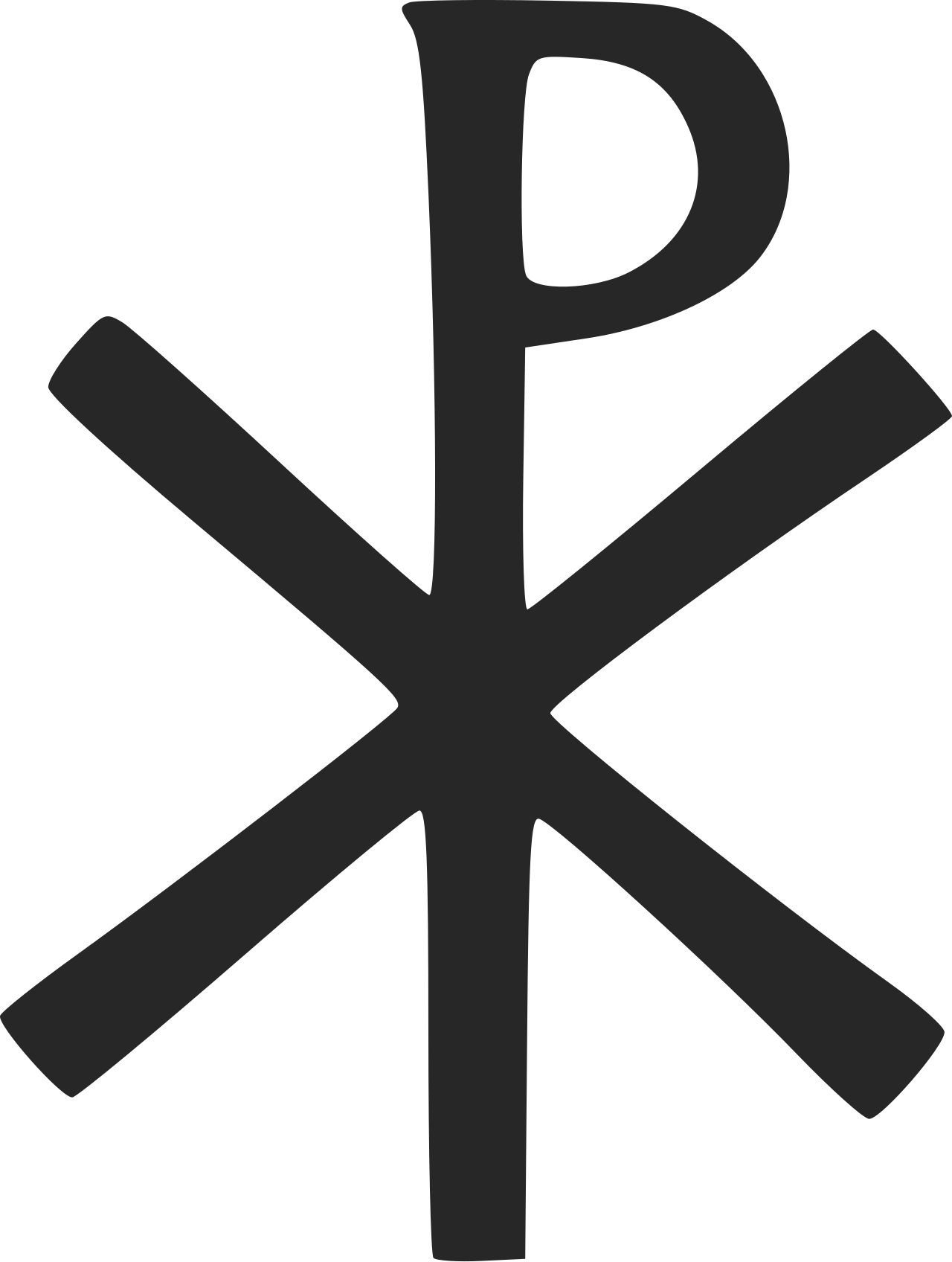
This is the Chi-Rho labarum is associated with Apollo, the Greek god of the sun, music, and archery. This was inscribed on every shield, and it is what brought the army victory over the Battle of Milian Bridge, removing Maximius from power. The triumphant Constantine gifted his newfound riches to the Christian community and converted Maximius’s Army Barracks into a church.
The Divine Power appointed several ancient rulers’ various omens as confirmation of their special destiny to rule. Emperor Claudius had an eagle land on his shoulder when he first entered the forum. Caretakers of Emperor Augustus were mysteriously ejected from the room when they tried to sleep in his nursery.
It is expected to be obvious that these stories weren’t taken literally.
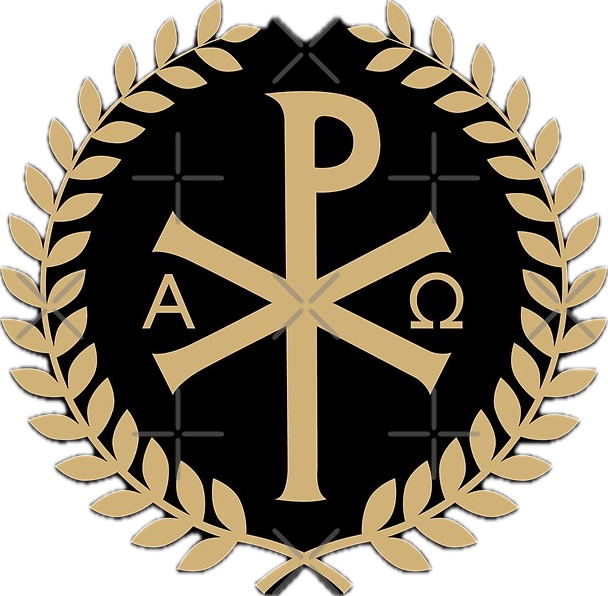
Constantine anecdotes have several supernatural experiences, not all of which were Christian.
One vision is said to have occurred years before Eusbius says that Constantine had a dream in which he was told to mark the heavenly sign of God on his soldiers shield.
There is no vision in the sky in this one.
Another one says Constantine saw a vision of Apollo, accompanied by victory, offering a laurel crown, which promised 30 years of life or rule.
A third vision occurred in the midst of battle, where all of Constantine’s troops were evidently lifted up by a vision.
This is the vision that legend recalls.
One of the best rationalizations of Constantine‘s visions was made by Peter Weiss1, an Archaeologist theorized that Constantine likely witnessed a solar halo which tends to take the shape of a cross, and Constantine interpreted this as a message from the Christian God.
Here is an image of a solar halo:

Soon after this event, Constantine’s followers began the rumor that he was descended from a very powerful and famous emperor, Claudius Gothicus, allowing Constantine to announce his imperial title and bring forward Christianity.
Constantine is responsible for passing the law making Sunday the day of rest, translated as “the day of the sun”. Is Constantine the sun god, or is it all a strategy of war? Perhaps we will have a better idea after reviewing his rise to power.
Heather, Peter J. Christendom: The Triumph of a Religion, AD 300-1300. First United States edition, Alfred A. Knopf, 2024.
Weiss P. The vision of Constantine. Journal of Roman Archaeology. 2003;16:237-259. doi:10.1017/S1047759400013088